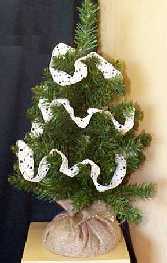
In the 16th century in Alsace, a region of Western Germany, the decorating of the Christmas Tree started. In 1747, the first American Christmas Tree was seen in the German Moravian settlement of Bethlehem, Pennsylvania.
Christbaum- Christmas Tree- is a symbol of Christ. The tree is decorated with cookies, gingerbread, and, candy. Victorian Americans chose tall trees and placed them on the floor. According to folklore, Santa brought the tree and trimmings and the parents decorated it, Christmas morning. For fun, the tree was loaded with sweets and they could not be eaten until the tree was taken down. The Christmas tree went up on Christmas eve, and was taken down on January 5.
To avoid the risk of fires, the candles were tapered for stability and
shaped into spirals to reduce the dripping wax. Beeswax and bayberry wax
was used instead of tallow, because they are less flammable. Weighted,
spring clips, or dishes were used as candle holders to catch the wax drippings.
In 1880 F.W. Woolworth agreed to display glass ornaments in his store; they sold out in a couple of days. In 1890 Woolworth traveled to Germany to choose the ornaments he would sell. Many of the ornaments were imported, most came from Lauscha, near Nuremberg.
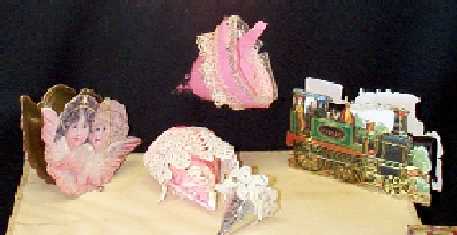
There was still glass ornaments back then, but the most popular was
the paper/cardboard ornaments that were made at home. Some were made with
gold or silver embossed paper, some were simple two-sided or they could
have been intricately carved out of wood. Some were even elaborate 3-D
hand painted detailed ornaments.